

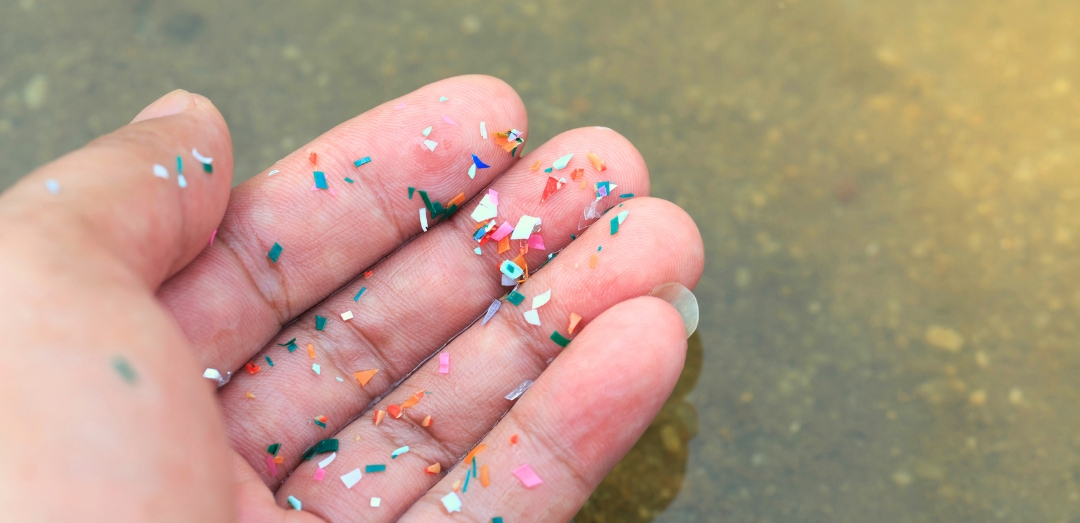
Microplastics from household waste are now one of the most widespread forms of pollution on the planet. These tiny plastic particles—often invisible to the eye—are released as everyday plastic products break down, wash away, or wear out. From food packaging and synthetic clothing to cleaning products and discarded plastics, what we use (and throw away) at home plays a direct role in how microplastics enter our environment.
A recent segment from 1A explored the growing concern around microplastics and why scientists, policymakers, and communities are paying closer attention to their impacts on ecosystems and human health. You can listen to or read the original piece here.
What Are Microplastics and Where Do They Come From?
Microplastics are plastic fragments smaller than five millimeters—about the size of a sesame seed or smaller. According to the National Oceanic and Atmospheric Administration (NOAA), these particles form when larger plastic products break down over time or are intentionally manufactured at a microscopic size for use in consumer products.
Many sources of microplastics household waste are surprisingly common: plastic packaging, synthetic textiles, disposable products, and even household dust. Once released, these particles can travel through wastewater systems, storm drains, soil, and air.
The United Nations Environment Programme (UNEP) notes that microplastics have now been detected in nearly every environment on Earth, making them a truly global pollution issue.
Why Microplastics Are a Problem
Environmental Impacts
Microplastics persist in the environment for decades, fragmenting further but never fully biodegrading. In waterways and oceans, they are easily mistaken for food by marine life, entering the food chain and disrupting ecosystems. Over time, plastic pollution originating from household waste contributes to widespread contamination in rivers, lakes, and coastal areas.
Because microplastics from household waste are so small, they are nearly impossible to remove once released—making prevention one of the most effective solutions.
Human Health Concerns
Research into the health effects of microplastics is still evolving, but early findings are raising red flags. The U.S. Environmental Protection Agency (EPA) continues to study how microplastics interact with human health and aquatic systems, particularly when it comes to long-term exposure.
Researchers at Harvard T.H. Chan School of Public Health report that microplastics have been found in human blood, lungs, and other tissues, with potential links to inflammation and cellular stress.
How Household Waste Contributes to Microplastics
Household waste is one of the most significant contributors to microplastic pollution. Everyday activities—like washing synthetic clothing, discarding plastic packaging, or using certain cleaning products—release microscopic plastic particles into both water and air.
Synthetic fabrics shed tiny microfibers during laundry cycles, many of which pass through wastewater treatment systems and ultimately end up in rivers, lakes, and oceans. Single-use plastics, even when properly discarded, can fragment over time as they degrade in landfills or are exposed to heat, sunlight, and friction in the environment.
Household products also play a role. Some common cleaning products and abrasives still rely on plastic-based ingredients, which can break down into microplastics during everyday use and disposal. Becoming more aware of product ingredients—and choosing alternatives when possible—is an important step in reducing microplastics from household waste.
Zero Waste Actions You Can Take at Home
While avoiding microplastics entirely is difficult, zero waste practices can significantly reduce how much plastic enters the waste stream—and ultimately the environment.
1. Reduce plastic at the source
Choose reusable containers, bags, and bottles instead of single-use plastics.
2. Opt for natural fibers
Clothing made from cotton, linen, or wool sheds fewer microplastics than synthetic fabrics.
3. Filter microfibers during laundry
Laundry filters or microfiber-catching bags can help trap fibers before they reach waterways.
4. Dispose of waste responsibly
Proper recycling and composting help keep plastics out of landfills where they break down into microplastics.
5. Choose microplastic-free products
Look for cleaning and personal care products without plastic-based ingredients.
Reducing microplastics from household waste isn’t about perfection—it’s about making better choices where possible.
Why Zero Waste Choices Matter
Microplastics are a symptom of how deeply plastic is embedded in modern life. But household decisions—what we buy, how we use it, and how we dispose of it—have a measurable impact. By reducing plastic waste at home, we limit one of the primary pathways through which microplastics enter the environment.
Zero waste living helps protect ecosystems, reduce long-term pollution, and support healthier communities—one choice at a time. And if you’re looking for guidance on how to reduce household waste, explore zero waste solutions, or take practical steps toward more sustainable living, Green365 is here to help.
Schedule a free consultation to talk through your goals and learn how small, thoughtful changes can make a meaningful difference.