

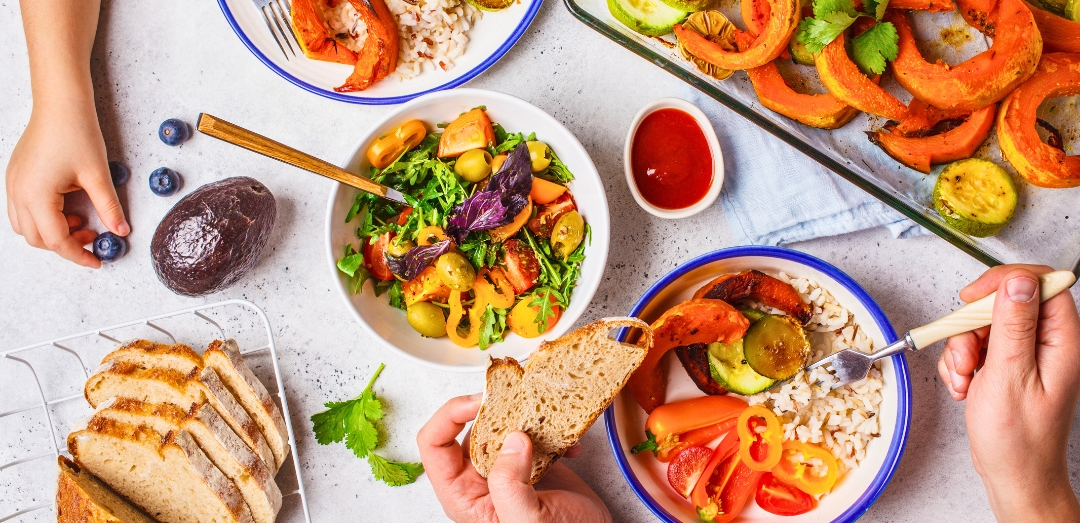
Why a Vegetarian Diet Matters
Environmental Benefits
Food production accounts for a substantial share of global greenhouse gas emissions, with meat and dairy production contributing disproportionately due to land use, feed production, and methane emissions. Diets centered on plant-based foods typically require fewer natural resources and result in lower overall environmental impact compared to meat-heavy diets.
Health Benefits
Diets rich in vegetables, fruits, whole grains, and legumes are associated with improved heart health, better weight management, and lower risk of chronic disease. Eating like a vegetarian often increases fiber intake while reducing consumption of processed and red meats—an eating pattern widely associated with long-term health benefits.
Vegetarian vs. Plant-Based: What’s the Difference?
Eating like a vegetarian doesn’t require strict rules or an all-or-nothing mindset. For some people, a vegetarian eating style means avoiding meat while still including foods like dairy and eggs. Others follow a vegan approach, which eliminates all animal products entirely. Many people, however, choose a plant-forward or flexitarian style that prioritizes vegetables, legumes, whole grains, and other plant foods while occasionally including meat.
What these eating styles have in common is a reduced reliance on animal agriculture and a greater emphasis on plant-based ingredients. Even modest reductions in meat consumption can produce meaningful environmental and health benefits over time, especially when meals focus on whole, minimally processed foods like beans, vegetables, grains, nuts, and seeds rather than heavily processed substitutes.
Simple Steps to Eat More Like a Vegetarian
Taking a step toward vegetarian eating doesn’t mean going cold turkey on meat overnight. Here are actionable ways to make the shift smoother, more enjoyable, and sustainable:
1. Start with Meatless Days
You don’t have to fully eliminate meat to see benefits. Try going meat-free one or two days a week — like Meatless Mondays — and expand as you find what works for your lifestyle.
2. Build Around Plant Proteins
Instead of thinking “no meat,” think “more beans and lentils”. Swap ground beef for lentils in tacos or chili, add chickpeas to salads, or enjoy tofu and tempeh sautés.
3. Embrace Whole Foods
Focus meals on vegetables, fruits, whole grains, nuts, seeds, and legumes. These foods deliver fiber and essential nutrients that support satiety and help naturally reduce reliance on calorie-dense meats. Prioritizing whole plant foods like vegetables, fruits, beans, and whole grains has also been linked to improved heart health—while aligning with broader environmental goals.
4. Explore Ethnic Cuisines
Indian, Middle Eastern, Mediterranean, and many Southeast Asian traditions offer delicious vegetarian classics that showcase plant-centric eating in flavorful ways.
5. Cook at Home More Often
Preparing meals at home gives you control over ingredients, cuts down on food waste, and enhances mindfulness about food choices — a great complement to zero waste principles.
Tips for Nutritional Balance
A vegetarian diet can be healthy, but variety matters. Paying attention to key nutrients helps ensure plant-forward meals remain balanced and satisfying:
-
Protein: Beans, lentils, tofu, tempeh, nuts, and seeds
-
Iron: Spinach, lentils, and fortified cereals
-
Vitamin B12: Fortified plant milks or supplements (especially important for fully plant-based diets)
-
Omega-3s: Walnuts, flaxseed, and chia seeds
Nutrient guidance from federally supported research highlights the importance of variety and thoughtful food choices when following vegetarian or plant-forward eating patterns.
If you have specific health concerns or dietary needs, working with a registered dietitian can help tailor a vegetarian eating plan that’s balanced and sustainable for you.
Vegetarian Eating and Zero Waste at Home
Eating like a vegetarian often goes hand-in-hand with zero waste living. Cooking more from scratch, choosing whole foods over packaged meats, and embracing seasonal produce aligns with reducing food packaging, cutting waste, and supporting local food systems — all core goals for a greener home. Whether you’re avoiding single-use meat packaging or planning plant-forward meals around leftovers, a vegetarian approach can dovetail with your broader zero waste lifestyle.
Ready to Make the Shift? Green365 Can Help
Eating like a vegetarian is often part of a bigger shift toward more sustainable living. From reducing food packaging and household waste to making more energy-conscious choices at home, small changes can add up to meaningful environmental impact.
Green365 helps households and businesses take a practical, informed approach to sustainability—whether that means cutting waste, improving energy efficiency, or exploring solar solutions that align with your values.
Schedule a free consultation to talk through zero waste strategies, energy-saving opportunities, and ways to make your home or business more environmentally responsible.