

Most of us rarely think about the U.S. power grid when we turn on a light, adjust the thermostat, or plug in a device. Electricity is expected to be available when we need it, and the complicated system responsible for making that happen largely stays in the background.
That system, however, is going through a period of significant change.
After years of relatively flat electricity demand, the United States is using more power again. Data centers, manufacturing, commercial development, household consumption, and other growing electricity needs are adding new demand. At the same time, the way electricity is generated is evolving as new solar, wind, natural gas, storage, and other resources are added to the system.
For homeowners and businesses, understanding these changes doesn't require becoming an expert in transmission lines or electricity markets. What matters is recognizing that the energy landscape is evolving—and that today's decisions about efficiency, solar, and long-term energy planning are being made within that changing system.
The U.S. Power Grid Was Built for a Different Energy Landscape
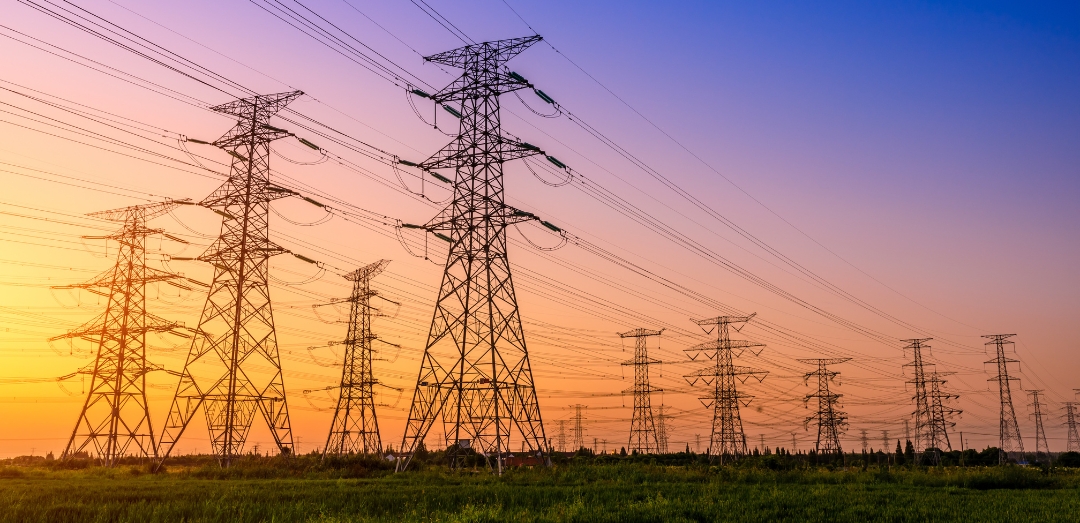
The power grid is actually a collection of interconnected systems that generate electricity, move it across long distances, and ultimately deliver it to homes and businesses.
Traditionally, much of that electricity has been produced at large centralized power plants. High-voltage transmission lines carry power across regions, while local distribution systems complete the final part of the journey to individual properties.
That basic structure still exists, but the demands placed on it are changing.
The U.S. Energy Information Administration (EIA) reported that U.S. electricity generation reached a record 4.43 trillion kilowatt-hours in 2025, an increase of 2.8% from the previous year. That growth is notable because electricity generation had remained relatively flat from the mid-2000s through the early 2020s. The EIA also reported increases in electricity sales across the residential, commercial, and industrial sectors and expects electricity generation to continue growing as demand increases.
That doesn't mean the grid is suddenly unable to meet the country's electricity needs. It does mean utilities, grid operators, regulators, and energy planners have to consider how existing infrastructure will accommodate new demand while continuing to provide reliable electricity.
Why Electricity Demand Is Growing Again
There isn't one single reason electricity demand is increasing.
Data centers have attracted considerable attention because of the amount of electricity required to operate computing equipment and cooling systems. The EIA identifies data centers as one contributor to recent commercial electricity-demand growth, while manufacturing and other industrial activity are also contributing.
Residential demand is changing as well. The EIA reported that residential electricity sales increased 2.2% in 2025, compared with increases of 2.9% in the commercial sector and 0.7% in the industrial sector.
In other words, the larger story isn't simply about one industry consuming more electricity. It's about a broader shift occurring after a long period when national electricity demand changed relatively little.
The U.S. Department of Energy's 2026 National Transmission Needs Study points to growing loads from data centers, expanding domestic manufacturing, large industrial facilities, economic growth, and electrification as factors creating a need for additional transmission infrastructure.
For consumers, these trends are worth understanding because increasing demand doesn't happen in isolation. New electricity generation has to be built and connected, infrastructure has to be maintained and expanded, and power still has to travel reliably from where it is produced to where it is needed.
Electricity Generation Is Changing
Demand represents only one side of the equation. The sources supplying electricity to the U.S. power grid are evolving as well.
Solar and other renewable resources have become increasingly significant additions to electricity generation. At the same time, natural gas, nuclear power, hydropower, and other established resources continue to play important roles in maintaining the country's electricity supply.
A more diverse energy mix can create new opportunities, but it also changes how the grid must be planned and operated.
Solar provides a useful example. A utility-scale solar project may be capable of producing a substantial amount of electricity, but generating the power is only part of the process. The project must also be able to connect to the transmission system so that electricity can reach customers.
The same basic principle applies to other new generating resources: adding electricity supply requires considering where that generation is located, where demand exists, and whether sufficient infrastructure is available between the two.
This is one reason conversations about America's energy future increasingly include not just how electricity is generated, but also how it is transported.
Why Transmission Has Become an Important Part of the Conversation
Transmission lines are essentially the highways of the electricity system. They move large quantities of electricity over long distances before local distribution systems deliver it to individual properties.
When transmission capacity is limited, bottlenecks can make it more difficult or expensive to move electricity between regions.
The Department of Energy's transmission analysis identifies current and anticipated capacity constraints and congestion across the nation's transmission system. The agency found a pressing need for additional infrastructure to accommodate load growth, connect new generation and loads, relieve congestion, and support reliability.
This doesn't translate into the same challenge everywhere. Energy needs, infrastructure, generation resources, and demand vary considerably by region.
It does illustrate why modernizing the U.S. power grid involves more than simply building additional power plants. Generation, transmission, distribution, and consumption all have to work together.
Reliability remains an important part of that planning. In its 2026 Summer Energy Market and Electric Reliability Assessment, Federal Energy Regulatory Commission staff projected that electricity consumption would be higher during summer 2026 than during each of the previous five summers. At the same time, new generation and transmission additions were expected to help address that higher demand. The assessment found adequate resources under normal operating conditions across all assessed areas while identifying potential challenges in certain regions during extreme conditions.
That distinction matters. A changing grid doesn't necessarily mean an unreliable grid. It means reliability increasingly depends on thoughtful planning for higher demand, changing generation resources, infrastructure needs, and extreme operating conditions.
What Does a Changing Power Grid Mean for Homeowners and Businesses?
For most people, national transmission planning isn't something they need to manage directly. The more useful question is what these broader changes mean for individual energy decisions.
One takeaway is that electricity should increasingly be viewed as a long-term operating consideration rather than simply another monthly bill.
Homeowners may want to better understand how much electricity their household uses, when consumption is highest, and how future changes such as an electric vehicle or home addition could affect that demand. Businesses may have even more variables to consider, including facility expansion, equipment upgrades, operating hours, sustainability goals, and long-term budget planning.
None of this means every property needs to dramatically change its energy strategy because national electricity demand is increasing.
It does reinforce the value of understanding the parts of the equation that you can influence.
Reducing unnecessary energy waste is one part of that strategy. Evaluating onsite electricity generation can be another. For some properties, energy storage may eventually play a role as well.
The appropriate combination depends on the property, its electricity usage, local utility structures, financial considerations, and long-term goals.
Where Solar Fits Into a Changing Energy System
Traditionally, homes and businesses have primarily been electricity consumers. Electricity is generated elsewhere, transported across the grid, and purchased from a utility.
Solar creates the opportunity for a property to generate some of its electricity where that electricity is actually being used.
That doesn't mean solar eliminates the need for the power grid. Most residential and commercial solar installations remain grid-connected, allowing the property to draw electricity from the grid when onsite generation isn't sufficient.
This distinction is important because solar is sometimes presented as an all-or-nothing alternative to utility electricity. In practice, the relationship is more complementary.
Onsite solar can allow a homeowner or business to produce a portion of its own electricity while remaining connected to the larger system. The financial and operational value of doing so depends on factors including energy consumption, available space, solar exposure, utility rates, local policies, and system design.
For someone evaluating solar, broader changes in the U.S. power grid are therefore useful context—but they shouldn't replace a property-specific analysis.
The better question isn't simply, “Is the grid changing?”
It's, “Given how energy is changing, what options make sense for this property over the long term?”
Where Energy Storage Enters the Picture
Battery storage is increasingly part of conversations about distributed energy, particularly when resilience or greater control over when stored electricity is used is a priority.
Solar and battery storage perform different functions. Solar generates electricity when sunlight is available, while a battery can store electricity for later use. When paired together, they can give a property more flexibility over how and when its solar-generated electricity is used.
It is also important to understand that a typical grid-connected solar system without appropriately configured battery storage generally does not provide backup electricity during a grid outage. Grid-connected systems are designed to shut down during an outage in part to protect utility workers who may be repairing power lines.
Whether battery storage makes sense is therefore a separate decision from whether solar makes sense. A homeowner or business may need to consider backup-power priorities, electricity consumption, local utility rate structures, system costs, and broader resilience goals when evaluating storage.
For some properties, solar alone may align well with long-term energy goals. For others, pairing solar with battery storage may provide additional benefits worth evaluating. And in some situations, improving energy efficiency may still be the most practical place to begin.
As the power grid continues to evolve, the important point is not that every property needs solar or battery storage. It is that homeowners and businesses have more options for thinking strategically about where their electricity comes from, how it is used, and how those choices fit into their long-term energy plans.
Taking a Longer View of Energy Decisions
No homeowner or business can predict exactly what the U.S. power grid will look like ten or twenty years from now. Technologies will continue to evolve, infrastructure will be added, electricity demand will change, and different regions will face different challenges.
That uncertainty doesn't mean energy planning has to be uncertain.
The more practical approach is to understand current energy use and evaluate which decisions can improve efficiency, manage long-term costs, or provide greater flexibility. That could mean reducing unnecessary energy consumption, evaluating solar, considering storage where appropriate, or simply developing a clearer understanding of how a property uses electricity before making a larger investment.
The changes taking place across the U.S. power grid provide important context for those decisions, but they aren't a reason to rush into them.
At Green365, our role is to help homeowners and organizations understand their options and evaluate energy solutions based on their actual needs. If you're considering solar or looking for a more practical approach to long-term energy planning, you can schedule a free consultation to discuss what makes sense for your property.